













Lecture on facelift surgery at Cutting Edge 2026
This is Dr. Nakao from Nakao Plastic Surgery.
I had the honor of delivering a lecture on facelift surgery at Cutting Edge 2026, held at Toranomon Hills on Feb 9th, 2026.
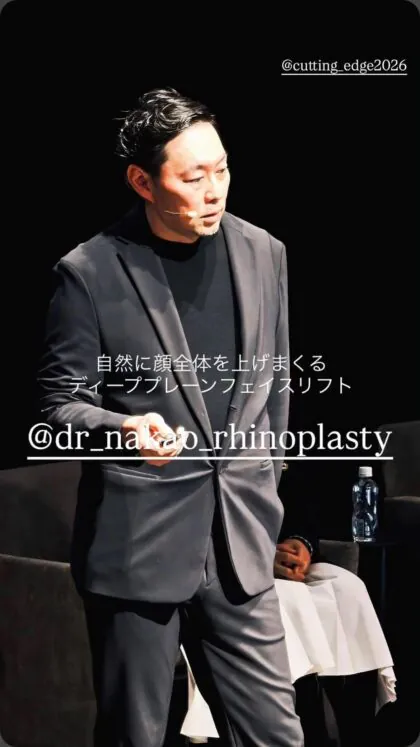
This event was designed for physicians and nurses involved in aesthetic medicine and surgery, providing a platform to present the latest advancements in cosmetic treatments and surgical techniques.
As our clinic has performed many Deep Plane Facelift surgeries as one of the pioneers in this field, I was invited by Dr. Ichihara of Meguro Gen Clinic to speak at this year's meeting.
One of the major themes of this conference was the integration of aesthetic surgery and aesthetic dermatology. Many patients who undergo facelift surgeries in our clinic have previously received various non-surgical treatment and procedures, therefore I also discussed how these prior interventions affect and changes the facial anatomy.
Layered structure of the face is very important which is inline with a lot of presenters.
Treatment such as injectables, machine treatment, liposuction, thread lifts, FaceTite can often enhance the outcomes of facelift surgery when performed with proper consideration of these layers.
Even in cases where the layered structure has been distorted, it is possible to achieve results comparable to those patients with no prior treatments by repairing the SMAS and platysma muscle during the surgery.
In our clinic, we also have patients who come to undergo their 2nd or 3rd or even more facelift procedures.
We remain committed to provide the most advanced and effective facelift surgery available.
Facelift surgery primarily focuses on lifting, however, from a skeletal standpoint where patients have small jaws, this would be a disadvantage when it comes to optimal jawline contour. In such cases, additional treatments such as using hyaluronic acid fillers can be highly effective.
In patients with significant sagging of the face, undergoing HIFU or RF treatments prior to surgery will help improve the condition of the SMAS and subcutaneous tissues.
We also have patients who previously underwent facelift surgeries without any treatments often experience prolonged benefits when additional non-surgical treatments are introduced postoperatively.
By respecting and understanding each patient's unique "facial history", we believe that facelift surgeries can be performed in a way that further enhances overall patient satisfaction.